
Overview of the Chemistry Regents Exam
The Chemistry Regents Exam assesses core concepts through multiple‑choice and free‑response items. Students review PDFs such as “practice test ౼ organic_answer key.pdf” and “regents review – questions by topic_2011_key.pdf” to gauge readiness and identify gaps. It meets standards boosts to analysis.
Exam Structure and Format
The Chemistry Regents Exam is divided into two main sections: a multiple‑choice portion and a free‑response segment. The multiple‑choice segment typically contains 75 questions, each with four answer choices, and is designed to test breadth across topics such as atomic structure, periodic trends, equilibrium, kinetics, and redox chemistry. Learners often use PDFs like “learning test ─ pbom_w key.pdf” and “learning test ─ redox.pdf” to familiarize themselves with the question style and pacing. The free‑response portion includes 5–6 long‑answer problems that require detailed explanations, calculations, and the application of chemical reasoning. These problems mirror the structure of PDFs such as “practice test 2 ─ kinetics equilibrium.pdf” and “practice test ౼ solutions.pdf,” which provide step‑by‑step solutions and key answer keys. Timing is strict: the multiple‑choice section is allotted 90 minutes, and the free‑response section receives 60 minutes. Scoring is weighted, with the multiple‑choice portion accounting for 60% of the total score and the free‑response portion for 40%. Understanding the format helps learners allocate study time efficiently and practice under realistic exam conditions. Students should also review the official NYSED Chemistry Regents Exam guidelines, which outline the weighting of each content area and provide sample answer keys. By practicing with the PDFs listed above, learners can simulate exam conditions, identify persistent misconceptions, and refine their problem‑solving strategies for the final test. This approach also encourages collaborative study groups for.
Score Thresholds and Certification
NYSED sets a minimum score of 70% for a passing grade on the Chemistry Regents Exam. Students who achieve this threshold receive a “Chemistry Regents Certified” designation, which is recorded on their high‑school transcript and can be used for college credit or advanced placement consideration. The exam is scored on a 100‑point scale, with the multiple‑choice portion weighted at 60 points and the free‑response portion at 40 points. A detailed score report is provided after the exam, showing a breakdown of performance across content areas such as atomic structure, periodic trends, equilibrium, kinetics, and redox chemistry. Many students use PDFs like “regents review – questions by topic_2011_key.pdf” and “practice test ─ solutions.pdf” to benchmark their scores against the official key answers and to identify which sections require further study. The certification process also includes a review of the student’s overall academic record; students who meet the score threshold but have not completed all required coursework may be required to retake certain units. For those who exceed the threshold, the certification is typically granted within a few weeks of the exam, and the official certificate is mailed to the student’s address on file. This certification can be added to a portfolio or uploaded to an online academic profile for future reference Students should review the NYSED scoring rubric to understand how each content area contributes to the overall score

Types of Questions in the PDF Resources

PDFs feature multiple‑choice items, short‑answer prompts, and problem‑solving scenarios. Key answers in files such as “practice test ౼ organic_answer key.pdf” allow instant feedback, while “practice test ౼ redox.pdf” tests kinetic and equilibrium concepts.
Students solve data‑interpretation queries now
Multiple Choice Questions and Key Answers
Multiple‑choice items in the Chemistry Regents PDFs are organized by topic, with each question followed by a concise key. For example, the “practice test – organic_answer key.pdf” pairs 40 questions with instant feedback, while “practice test – redox.pdf” focuses on electron transfer scenarios. Students can use the “regents review – questions by topic_2011_key.pdf” to compare their responses against the official key, ensuring alignment with the New York State curriculum. The key files often include brief explanations that clarify why the correct answer is chosen, helping learners understand underlying principles such as stoichiometry, equilibrium constants, and kinetic rate laws. By reviewing the key after attempting a set, students identify misconceptions, adjust study strategies, and reinforce accurate conceptual frameworks. The PDFs also feature practice tests that simulate the exam’s timing and difficulty, allowing learners to gauge readiness before the actual Regents assessment. Students also review the answer explanations to see common pitfalls, such as misapplying the law of conservation of mass or incorrectly balancing redox equations. The PDFs provide a structured approach: first read the question, then select the best answer, and finally check the key to confirm reasoning. This cycle reinforces memory and builds confidence for the timed exam. Additionally, many PDFs include a brief summary of key concepts, allowing quick revision before the test day. This method ensures comprehensive coverage of all exam topics now
Short-Answer and Problem-Solving Prompts
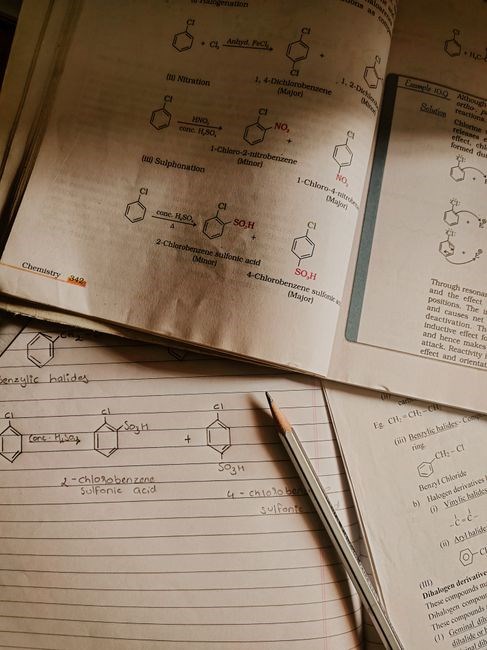
Short‑answer sections in the Chemistry Regents PDFs demand concise, accurate explanations that demonstrate mastery of concepts like reaction stoichiometry, equilibrium shifts, and kinetic rate equations. The “practice test – solutions.pdf” and “practice test 2 – kinetics equilibrium.pdf” provide full‑length prompts where students calculate equilibrium constants, convert units, and predict product distributions. These prompts often require drawing balanced equations, labeling oxidation states, or sketching potential energy diagrams. Students are encouraged to write clear, step‑by‑step solutions, as the answer keys in the PDFs highlight common calculation errors—such as misapplying the Henderson–Hasselbalch equation or overlooking activity coefficients. By comparing their written responses to the key explanations, learners refine their problem‑solving strategies and improve precision. The PDFs also include “regents review – orange review book_2014.pdf” which offers a series of short‑answer questions that test conceptual understanding of atomic structure and periodic trends. These questions require students to explain why certain elements exhibit particular reactivity patterns or why a reaction proceeds under given conditions. The emphasis on written reasoning helps students articulate the logical flow from premise to conclusion, a skill that is critical for the free‑response portion of the Regents exam. Regular practice with these prompts, coupled with immediate feedback from the key files, builds confidence and ensures readiness for the timed assessment!!!

Key Concept Areas Covered in PDFs
PDFs cover atomic structure, periodic trends, matter states, redox mechanisms, equilibrium constants, kinetic rate laws, and solution chemistry. They include practice tests like “practice test – periodic table_w key.pdf” and “practice test 2 – kinetics equilibrium.pdf” for focused review. for exam prep. Use PDFs daily.!!
Atomic Structure, Periodic Table, and Matter
Students consult PDFs such as “practice test – atomic structure questions” and “practice test – periodic table_w key.pdf” to master electron configurations, isotope notation, and atomic mass calculations. Key concepts include quantum numbers (n, l, m, s), valence shell filling, and the role of shielding in effective nuclear charge. The periodic table’s organization—group trends in electronegativity, ionization energy, and atomic radius—provides a framework for predicting reactivity. Matter sections cover macroscopic states, phase changes, and the distinction between pure substances and mixtures. Density, molarity, and solution stoichiometry are examined through problem sets that require unit conversions and the application of the ideal gas law. Mastery of these topics is essential for accurately answering both multiple‑choice and free‑response questions on the Regents exam.
Students often use PDF compilations like “practice test – solutions.pdf” and “regents review – questions by topic_2011_key.pdf” to identify weak areas. By marking correct answers and reviewing explanations, learners reinforce concepts such as electron shell filling, periodic trends, and stoichiometric calculations. Consistent practice with these resources builds confidence for the timed exam environment.
Reviewing key answer explanations helps students spot misconceptions in stoichiometry and equilibrium, then adjust study focus. Revisiting PDFs before the exam reinforces keyformulasandconcepts.
Chemical Equilibrium, Kinetics, and Redox Reactions
Exam preparation relies heavily on PDFs such as “practice test – redox.pdf” and “practice test – kinetics equilibrium.pdf.” These documents present balanced equations, reaction quotients, and rate laws, enabling students to calculate equilibrium constants (Kc, Kp) and interpret Le Chatelier’s principle. Redox sections emphasize oxidation numbers, half‑reaction methods, and the connection between electron transfer and energy changes. Kinetic problems require analysis of reaction order, rate-determining steps, and activation energy, often illustrated with Arrhenius plots. By solving sample problems, students learn to identify catalysts, temperature effects, and the impact of concentration on reaction speed. The PDFs also include key answer explanations that clarify common pitfalls, such as misapplying the Nernst equation or incorrectly determining the direction of a redox reaction. Regular practice with these resources builds proficiency in translating chemical equations into quantitative predictions, a skill essential for the Regents exam’s free‑response section. Students should also practice interpreting reaction diagrams, estimating equilibrium positions from given concentrations, and applying the Nernst equation to real‑world scenarios, ensuring a comprehensive grasp of both theoretical and practical aspects. Mastery of these concepts is demonstrated by accurate solving multi‑step redox balances and kinetic rate‑law derivations under timed conditions.

Strategies for Using PDFs for Study
Use PDF resources like “practice test – redox.pdf” to practice key concepts. Highlight terms, annotate margins, and create flashcards from highlighted sections. Schedule timed quizzes, review answer keys, and compare solutions. Consistent, focused sessions build mastery and exam confidence.Dailystudy!

Active Reading and Note-Taking Techniques
Start by skimming a PDF such as “practice test – solutions.pdf” to identify major sections: atomic structure, kinetics, equilibrium, redox, and organic chemistry. Highlight key terms and underline formulas that recur across multiple practice tests. Use the Cornell method: divide the page into a narrow left column for cues, a wide right column for notes, and a summary at the bottom. After each section, write a one‑sentence summary in your own words to reinforce understanding. When reviewing “regents review – questions by topic_2011_key.pdf,” annotate the margin with question numbers and the corresponding answer key references; this links theory to practice. Create a color‑coded system—blue for definitions, red for equations, green for example problems—to quickly locate information during timed practice. Periodically test yourself by covering the answer key and attempting to solve problems from “practice test 2 – kinetics equilibrium.pdf.” Record any mistakes and revisit the relevant PDF pages to clarify misconceptions. Finally, compile a master study sheet that aggregates all key concepts, formulas, and common pitfalls identified across the PDFs. This active, organized approach turns passive reading into a dynamic learning process, ensuring thorough preparation for the exam.
Use spaced repetition by revisiting key concepts every few days daily, create mnemonic devices for complex equations, and draw balanced equations from scratch. Keep a log of time spent on each topic to spot weak areas.
Practice Testing and Self-Assessment
Begin by downloading the “practice test – organic_answer key.pdf” and “practice test – redox.pdf” from the official NYS Regents repository. Allocate 90 minutes each day to complete a full test. Record your raw score and compare it to the key. Use a spreadsheet to log each question’s difficulty rating, the time taken, and whether the answer was correct. After each session, perform a gap analysis: highlight topics where your accuracy fell below 80% and revisit sections in “regents review – questions by topic_2011_key.pdf.” Schedule targeted mini‑quizzes on those topics, using the “practice test 2 – kinetics equilibrium.pdf” for kinetics and the “practice test – periodic table_w key.pdf” for periodic table concepts. Implement the “two‑minute rule” by reviewing the answer key immediately after each question to reinforce learning. Additionally, create flashcards for key equations and definitions, and test yourself using spaced repetition software. Consistently reviewing these PDFs keeps concepts fresh and improves retention over time. Use these PDFs to identify gaps early! Color code key topics for recall
When reviewing the answer key, annotate the PDF with color‑coded notes: green for correct reasoning, red for misconceptions, and yellow for correct answers. This method turns review into an active diagnostic process, sharpening focus on concepts! Use color coding highlight trends patterns across topics.

Accessing and Managing PDF Resources
Use official NYS sites, download PDFs like “practice test – redox.pdf” and “regents review – questions by topic_2011_key.pdf.” Store them in a folder, rename for clarity, and use a version control system to track updates. Organize by topic for quick access.

Reliable Online Sources and Download Links
Students seeking chemistry regents questions and answers pdfs should begin with the New York State Education Department’s official portal, which hosts a curated collection of practice exams and answer keys. The portal lists titles such as “practice test – redox.pdf,” “practice test – solutions.pdf,” and “regents review – questions by topic_2011_key.pdf.” Each file is labeled with the exam year and format, allowing quick identification of the most recent materials. In addition to the state site, repositories like the NYS Regents Exam Archive provide downloadable PDFs for topics from atomic structure to kinetics equilibrium. These resources are typically compressed into ZIP archives to preserve formatting; users should unzip them with standard software before opening. For teachers and students can use the “Mr. Konopas Chemistry Pages” site for note sheets and answer keys, such as “matter questions matter notes” and “periodic table questions periodic table.” When downloading, verify file size and checksum to ensure integrity. Finally, high‑school chemistry teachers upload practice tests like “practice test – organic_answer key.pdf” and “practice test 2 – periodic table_w key.pdf” to shared drives also. These files are often accompanied by a brief description of the covered concepts, making them useful for targeted review sessions. By cross‑referencing multiple sources, students can compile a comprehensive set of practice questions and answer keys that reflect the breadth of the regents curriculum!
Organizing Files and Version Control
When compiling chemistry regents questions and answers pdfs, a systematic folder hierarchy reduces confusion. Create a root directory named “NYC_Regents_2026.” Inside, subfolders for each content type—Practice Tests, Answer Keys, Review Notes, and Topic‑Specific PDFs—keep files grouped by function. Use a consistent naming convention: YYYY‑Exam‑Topic‑Version.pdf (e.g., 2026‑Redox‑v1.pdf). This format allows instant identification of the most recent revision. For version control, store the original source files in a subfolder called “Archive.” Whenever a new version is downloaded, increment the version number and move the previous file to the archive. Employ a simple spreadsheet or a cloud‑based document (Google Sheets, Airtable) to log each file’s source URL, download date, and a brief content summary. This log serves as a lightweight version history and aids in troubleshooting. If collaborating with classmates or teachers, share the folder via a cloud service that supports versioning—Google Drive, OneDrive, or Dropbox. Enable the “Version History” feature so that any accidental overwrite can be recovered. Finally, back up the entire folder structure to an external drive or a separate cloud account to guard against data loss. By maintaining a clear, version‑aware system, students can focus on mastering concepts rather than hunting for the correct pdf. Students should cross‑reference these PDFs with NYS exam guidelines to ensure alignment with standards fully.