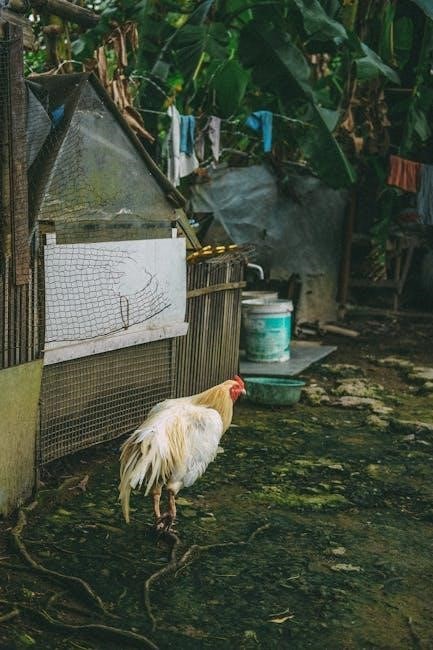
Manual chicken coop doors offer a straightforward, reliable solution for securing your flock, blending simplicity with cost-effectiveness for dedicated chicken keepers.
These doors, often DIY projects, provide essential protection against predators and weather, requiring direct operation by the owner for opening and closing.
Numerous online resources, like those detailing Arduino projects and automatic door builds, highlight the foundational principles applicable to manual systems.
Why Choose a Manual Door?
Manual chicken coop doors present a compelling choice for those prioritizing affordability and control. Unlike automatic doors, they eliminate the need for complex wiring, sensors, or solar panels, reducing initial investment and potential maintenance headaches.
Many backyard chicken enthusiasts, as seen in DIY projects, appreciate the hands-on aspect of daily coop management. This direct interaction allows for consistent monitoring of flock health and coop conditions.
Furthermore, manual doors offer reliability – they won’t fail due to power outages or electronic malfunctions, a crucial consideration in remote locations or during severe weather, as highlighted by various online forums.
Benefits of a Secure Coop Door
A securely fastened chicken coop door, whether manual or automatic, is paramount for protecting your flock. It defends against predators like foxes, raccoons, and hawks, minimizing losses and stress for your chickens.
Beyond predator protection, a robust door safeguards against harsh weather conditions, providing a stable and comfortable environment. This is especially vital during extreme temperatures or storms.
As demonstrated in DIY projects and discussions about Arduino-based systems, a well-built door contributes to overall coop integrity, ensuring a safe haven for your birds and peace of mind for you.
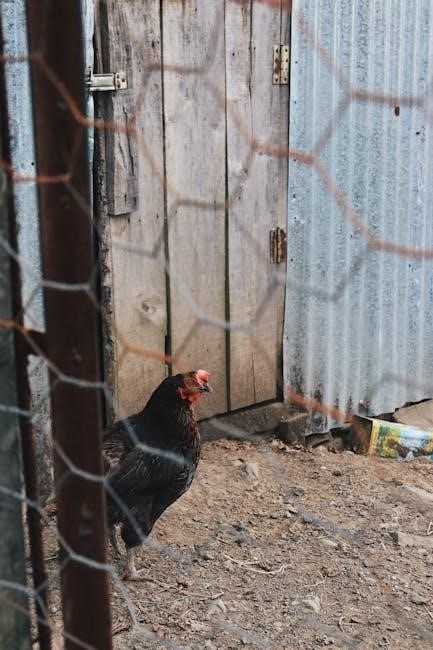
Planning Your Manual Chicken Coop Door
Planning a manual chicken coop door involves assessing your coop’s structure, chicken breed, and desired security level for optimal functionality.
Careful consideration of these factors ensures a door that’s both practical and effective in protecting your feathered friends.
Door Size and Chicken Breed Considerations
Determining the correct door size is crucial, directly impacting your chickens’ comfort and security. Larger breeds, like Brahmas or Orpingtons, require wider and taller openings than smaller varieties like Bantams.
A general guideline suggests a minimum door height of 12-14 inches and a width of 10-12 inches, but adjust based on your flock’s size.
Insufficient space can lead to injuries during entry/exit, while excessively large doors compromise predator protection. Consider the number of chickens needing access simultaneously to prevent bottlenecks.
Proper sizing ensures smooth, safe operation and maximizes the door’s effectiveness.
Materials Needed: Wood, Hinges, Latches
Constructing a manual chicken coop door requires durable materials. Pressure-treated lumber resists rot and withstands weather, ideal for the door frame and panel. Pine or cedar are also viable options.
Heavy-duty hinges are essential for smooth operation and longevity, supporting the door’s weight. Select rust-resistant options.
A robust latch is paramount for predator-proofing; consider a locking latch or carabiner clip. Screws, nails, wood glue, and potentially wire mesh for added security complete the material list.
Tools Required for Construction
Building a manual chicken coop door necessitates a basic toolkit. A saw – circular or hand saw – is crucial for accurate wood cuts. A drill with various bits facilitates screw driving and pilot hole creation.
A measuring tape, square, and pencil ensure precise measurements and straight lines. A hammer is needed for nailing, while a screwdriver (or drill with screwdriver bits) secures screws.
Safety glasses and gloves are essential for protection. Sandpaper smooths rough edges, and a level guarantees a properly aligned door.
Construction Steps: Building the Door Frame
Door frame construction begins with precise wood measurements and cuts, followed by careful assembly using screws or nails for a robust structure.
Reinforcing corners enhances durability, creating a solid base for the door and ensuring long-lasting protection for your chickens.
Measuring and Cutting Wood
Accurate measurements are crucial for a well-fitting door; determine the coop opening’s height and width, accounting for a slight overlap for a secure seal.
Select appropriate lumber – pine or cedar are common choices – and carefully transfer measurements onto the wood using a pencil and square.
Employ a saw (circular, hand, or miter) to make precise cuts, prioritizing safety with eye protection and a stable work surface.
Double-check all dimensions before assembly, ensuring the frame will seamlessly integrate with the chicken coop structure, as highlighted in DIY guides.
Assembling the Door Frame
Begin assembling the door frame by joining the cut wood pieces using wood screws or nails, ensuring square corners for a stable structure.
Pre-drilling pilot holes prevents wood splitting, especially with hardwoods, and facilitates easier screw insertion, enhancing the frame’s integrity;
Utilize wood glue in conjunction with fasteners for a stronger, more durable bond, mirroring techniques found in DIY coop construction resources.
Regularly check for squareness during assembly, adjusting as needed to maintain a properly aligned frame, vital for smooth operation, like automatic door designs.
Reinforcing the Frame for Durability
Enhance the door frame’s strength by adding corner braces or metal brackets, particularly crucial for resisting predator attempts, echoing coop fortification advice.
Consider applying exterior-grade wood sealant or paint to protect against weather damage, extending the frame’s lifespan, similar to automatic door weatherproofing.
Adding a center support beam, especially for larger doors, prevents sagging and maintains structural integrity, mirroring DIY build techniques.
Ensure all fasteners are securely tightened and countersunk to prevent injury to chickens and maintain a smooth, safe operating surface.
Installing the Door: Hinges and Latches
Securely attaching hinges and a reliable latch is paramount for a functional, predator-resistant manual chicken coop door, ensuring flock safety and ease of use.
Proper installation, referencing DIY guides, guarantees smooth operation and prevents unwanted access, vital for coop security.
Choosing the Right Hinges
Selecting appropriate hinges is crucial for a durable manual chicken coop door; consider the door’s weight and the coop’s material when making your choice.
Heavy-duty hinges, like those made of galvanized steel, resist rust and withstand frequent use, offering longevity and reliability, especially in varying weather conditions.
Piano hinges distribute weight evenly, minimizing stress on the door frame, while butt hinges are a common, cost-effective option for lighter doors.
Ensure the hinges are appropriately sized for the door and frame, allowing for smooth, unobstructed swinging action, vital for daily operation and predator protection.
Securely Attaching the Hinges
Proper hinge installation is paramount for a secure manual chicken coop door; use screws, not nails, for a robust and lasting connection.
Pre-drilling pilot holes prevents wood splitting, ensuring screws bite firmly into both the door and the coop frame, maximizing stability.
Employ screws of sufficient length to penetrate deeply into the wood, providing a strong hold against forceful entry attempts by predators.
Regularly check screw tightness, as vibrations and weather can loosen them over time, compromising the door’s security and functionality.
Selecting and Installing a Reliable Latch
Choosing the right latch is crucial for predator-proofing your manual chicken coop door; opt for latches that require a deliberate, two-handed action to open.
Avoid simple hook-and-eye latches, as they are easily manipulated by resourceful animals; consider spring-loaded latches or those with locking mechanisms.
Install the latch at a height inaccessible to predators while remaining easily operable for you, ensuring convenient daily access to the coop.
Reinforce the latch mounting area with extra wood to prevent damage from persistent attempts to breach the coop’s security.
Safety Features and Considerations
Manual coop doors demand careful attention to predator-proofing, eliminating gaps, and ensuring smooth operation to prevent injuries to your valuable chickens.
Prioritize robust construction and secure latches, referencing DIY projects and automatic door principles for enhanced safety measures.
Predator-Proofing the Door
Protecting your flock requires a meticulously designed and installed manual coop door, focusing on deterring determined predators like foxes and raccoons. Ensure the door frame fits snugly within the coop structure, eliminating gaps where animals could pry or squeeze through.
Employ heavy-duty hardware cloth around the door opening for added reinforcement, extending it underground to prevent digging. A robust latch, resistant to manipulation, is crucial, as highlighted in DIY projects and discussions about automatic door security. Regularly inspect for wear and tear, addressing any vulnerabilities promptly to maintain a secure environment for your chickens.
Avoiding Gaps and Weak Points
Maintaining a secure coop hinges on eliminating potential entry points for predators. Carefully measure and cut wood for the door frame, ensuring a tight fit against the coop walls. Pay close attention to corners and edges, reinforcing them with additional wood or metal brackets.
Seal any small openings with caulk or weather stripping. As seen in DIY builds and discussions about automatic chicken doors, even seemingly minor gaps can be exploited. Regularly inspect the door and frame for signs of weakness, addressing any issues immediately to safeguard your flock.
Smooth Operation and Preventing Injuries
Prioritize safety when designing and installing your manual chicken coop door. Ensure the door swings freely without binding, preventing chickens from becoming trapped or injured. Use hinges that allow for a full range of motion, and avoid sharp edges or protruding hardware.
Consider the weight of the door; a heavy door could pose a risk. Regular lubrication of hinges, as suggested in maintenance guides, will contribute to smooth operation. A well-functioning door protects your flock and simplifies daily routines.
Troubleshooting Common Issues
Manual coop doors can experience sticking, latch malfunctions, or weather damage. Regular inspection and adjustments, alongside wood protection, are crucial for consistent performance.
Addressing these issues promptly ensures continued security and ease of use for both you and your chickens.
Door Sticking or Binding
Door sticking often arises from swelling wood due to humidity, misaligned hinges, or debris accumulation. Begin by inspecting the hinges for looseness and tightening screws as needed.
Carefully examine the door’s perimeter for rubbing points against the frame; sanding these areas can provide clearance. Lubricating hinges with silicone spray or oil facilitates smoother operation.
Ensure the latch mechanism isn’t contributing to the bind. If issues persist, consider re-aligning the entire door frame or adjusting the mounting points.
Latch Malfunctions
Latch malfunctions frequently stem from misalignment, rust, or a weakened mechanism. Regularly inspect the latch for corrosion and apply lubricant to ensure smooth operation.
Verify the latch bolt fully engages with the strike plate; adjustments may be needed to achieve a secure closure. If the latch feels loose, tighten all associated screws.
Consider upgrading to a heavier-duty latch for enhanced security, particularly in predator-prone areas. A failing latch compromises coop security, necessitating prompt repair or replacement.
Wood Rot and Weather Damage
Wood rot and weather damage are significant concerns for manual chicken coop doors, especially with prolonged exposure to the elements. Regularly inspect the wood for signs of decay, softening, or discoloration.
Apply a weather-resistant sealant or paint annually to protect the wood from moisture and UV rays. Ensure proper drainage around the coop to prevent water accumulation.
Replace any rotted or severely damaged wood immediately to maintain structural integrity and security. Prompt attention prevents further deterioration and costly repairs.
Maintenance and Upkeep
Regular inspection of hinges, latches, and wood is crucial for a manual chicken coop door, ensuring smooth operation and longevity against weather and predators.
Lubrication prevents sticking, while protective coatings safeguard against rot, maintaining a secure environment for your flock.
Regular Inspection of Hinges and Latches
Consistent checks of the hinges and latches are paramount for maintaining a secure chicken coop door. Look for signs of rust, corrosion, or loosening screws, addressing these issues promptly to prevent failures.
Ensure hinges move freely without binding, applying lubricant as needed. The latch mechanism should engage firmly, offering robust predator protection. Inspect for wear and tear, replacing components before they compromise security.
A proactive approach, as emphasized in DIY coop resources, avoids inconvenient malfunctions and safeguards your flock, mirroring the reliability sought in automatic door systems.
Protecting the Wood from the Elements
Wood preservation is crucial for a long-lasting manual chicken coop door. Apply a weather-resistant sealant or paint to shield the wood from rain, snow, and sun exposure, preventing rot and warping.
Regularly reapply the protective coating, especially in harsh climates. Consider using pressure-treated lumber during construction for enhanced durability. Proper sealing extends the door’s lifespan, reducing maintenance.
This proactive care, similar to safeguarding components in automatic door builds, ensures a secure and functional coop, as highlighted in various DIY guides.
Lubrication for Smooth Operation
Regular lubrication of hinges and latches is vital for effortless opening and closing of your manual chicken coop door. Use a silicone-based lubricant to prevent rust and ensure smooth movement, especially during colder months.
Avoid oil-based lubricants, as they can attract dirt and grime. Inspect hinges and latches frequently for stiffness and apply lubricant as needed.
This simple maintenance, akin to ensuring reliable function in automatic door systems, prevents sticking and extends the door’s operational life, as seen in DIY projects.
Cost Analysis: Manual vs. Automatic Doors
Manual doors boast lower initial costs compared to automatic systems, often under $100 for DIY builds, but lack the convenience of automated operation.
Long-term costs are minimal, primarily involving occasional hardware replacement, unlike the ongoing power or repair needs of automated alternatives.
Initial Investment Costs
Manual chicken coop doors present a significantly lower upfront investment compared to their automated counterparts. A basic DIY build, utilizing readily available lumber and hardware, can often be completed for under $50, sometimes even less depending on salvaged materials.
Essential components like wood, hinges, and latches contribute to the cost, but remain relatively inexpensive. Pre-built manual doors typically range from $80 to $150, offering convenience at a modest price increase. Considering the price of automatic doors exceeding $200, the savings are substantial.
Long-Term Maintenance Costs
Manual chicken coop doors boast remarkably low long-term maintenance expenses. Unlike automatic doors requiring potential repairs to motors, sensors, or solar components, manual doors primarily need occasional lubrication of hinges and latch mechanisms.
Periodic wood treatment to prevent wood rot and weather damage is recommended, costing around $20-$30 every few years for sealant or paint. Replacing worn hinges or latches is inexpensive, typically under $10 per component. This simplicity translates to sustained cost-effectiveness over the door’s lifespan.
Evaluating the Value Proposition
Manual chicken coop doors present a compelling value, particularly for smaller flocks or owners prioritizing simplicity and budget-friendliness. The initial investment is significantly lower than automatic systems, often under $50 for materials if built DIY.
While lacking the convenience of automation, the long-term maintenance costs are minimal, and the robust design ensures durability. Considering the essential function of predator protection, a manual door delivers substantial security at a fraction of the price.
DIY vs. Pre-Built Options
DIY manual doors offer customization and cost savings, while pre-built options provide convenience and potentially higher build quality, balancing effort and expense.
Resources like Arduino projects inspire self-construction, but pre-made kits, such as those from JVR, offer a quicker solution for chicken keepers.
Advantages of Building Your Own
Constructing a manual chicken coop door yourself unlocks significant advantages, starting with cost control – avoiding the premium of pre-built units, potentially saving over $200.
You gain complete customization, tailoring the door’s size and features to your specific coop and breed needs, unlike standardized options.
DIY projects, inspired by resources like Arduino builds, foster a deeper understanding of coop security and allow for robust predator-proofing.
Furthermore, building provides a rewarding sense of accomplishment and the opportunity to utilize readily available materials, enhancing self-sufficiency.
Benefits of Purchasing a Pre-Made Door
Pre-made manual chicken coop doors offer convenience and time savings, eliminating the need for measuring, cutting, and assembling materials – a boon for those less inclined towards DIY projects.
These doors often feature professionally engineered designs, ensuring durability and a secure fit, potentially exceeding the quality of amateur builds.
Consistent manufacturing standards guarantee reliable operation, reducing the risk of sticking or malfunctioning latches, unlike customized solutions.
Options like the JVR Automatic Chicken Door demonstrate readily available, quality solutions for simplified coop management.
Comparing Quality and Price
Manual chicken coop doors exhibit a wide price range, correlating directly with material quality and construction complexity; DIY options can be very affordable, utilizing reclaimed wood.
Pre-built doors, like those from JVR, generally command a higher price due to professional manufacturing and robust materials, promising longevity.
However, a well-constructed DIY door can rival pre-made quality with careful execution, potentially saving significant costs.
Consider long-term value; a durable, secure door justifies a higher initial investment, minimizing future repairs or replacements.
Advanced Manual Door Designs
Manual coop doors can be enhanced with features like windows for ventilation, ramps for accessibility, or even double-door systems for added security.
These additions improve functionality and chicken well-being, building upon the basic design for a more customized and efficient setup.
Adding a Window for Ventilation
Integrating a window into your manual chicken coop door significantly improves airflow, crucial for maintaining a healthy environment for your flock, especially during warmer months.
A well-placed window allows for natural ventilation, reducing ammonia buildup and moisture, which can lead to respiratory issues in chickens.
Consider using durable, transparent materials like polycarbonate for the window, ensuring it’s securely fastened within the door frame.
Adding a mesh covering provides extra protection against predators while still allowing for ample ventilation, enhancing the overall coop design.
Incorporating a Ramp for Easy Access
Adding a ramp to your manual chicken coop door facilitates effortless entry and exit for chickens, particularly beneficial for heavier breeds or younger birds.
A gently sloping ramp constructed from wood with textured surfaces provides secure footing, preventing slips and injuries as chickens move in and out.
Ensure the ramp’s width accommodates multiple chickens simultaneously, reducing congestion during peak times.
Proper ramp integration enhances the coop’s usability and promotes the well-being of your flock, making daily routines more manageable.
Creating a Double-Door System
Implementing a double-door system for your manual chicken coop significantly boosts security and minimizes predator risks, creating an airlock-style entry.
The outer door acts as a first line of defense, while the inner door secures the coop itself, preventing access even if the outer door is breached.
This design is particularly valuable in areas with persistent predator threats, offering an extra layer of protection for your valuable flock.
Careful construction and secure latching mechanisms are crucial for the effectiveness of this enhanced security feature.

Resources and Further Information
Online forums and websites offer valuable DIY guidance, including Arduino projects and discussions on automatic chicken coop doors, aiding manual door construction.
Explore communities for shared experiences and expert advice on securing your flock and building effective coop access solutions.
Online Forums and Communities
Engaging with online communities dedicated to backyard chickens provides a wealth of practical knowledge for building and maintaining manual coop doors. Platforms host discussions on DIY projects, offering step-by-step guidance and troubleshooting advice, often referencing Arduino-based automation as a comparative point.
These forums are invaluable for sharing experiences, receiving feedback on designs, and learning about predator-proofing techniques. Many users document their builds, including modifications to pre-built doors, offering visual aids and detailed instructions. Active participation can significantly enhance your project’s success, fostering a collaborative learning environment.
Helpful Websites and Articles
Numerous websites detail the construction of manual chicken coop doors, often alongside guides for automatic door systems utilizing components like Arduino. These resources frequently feature DIY tutorials, material lists, and safety considerations, covering everything from basic frame building to latch mechanisms.
Articles emphasize predator protection and weatherproofing, crucial for coop security. Many sites showcase project examples, including those incorporating solar power for automated features, offering inspiration and practical advice for building a durable and functional door;
Recommended Books and Guides
While dedicated books specifically on manual chicken coop doors are scarce, general poultry keeping guides often include sections on coop construction and security, covering door design principles. Resources detailing DIY projects and woodworking fundamentals are invaluable for building a robust door.
Online forums and communities, frequently referenced alongside Arduino projects and automatic door builds, serve as practical guides, offering shared experiences and troubleshooting advice. Look for guides emphasizing predator-proofing and durable materials.